


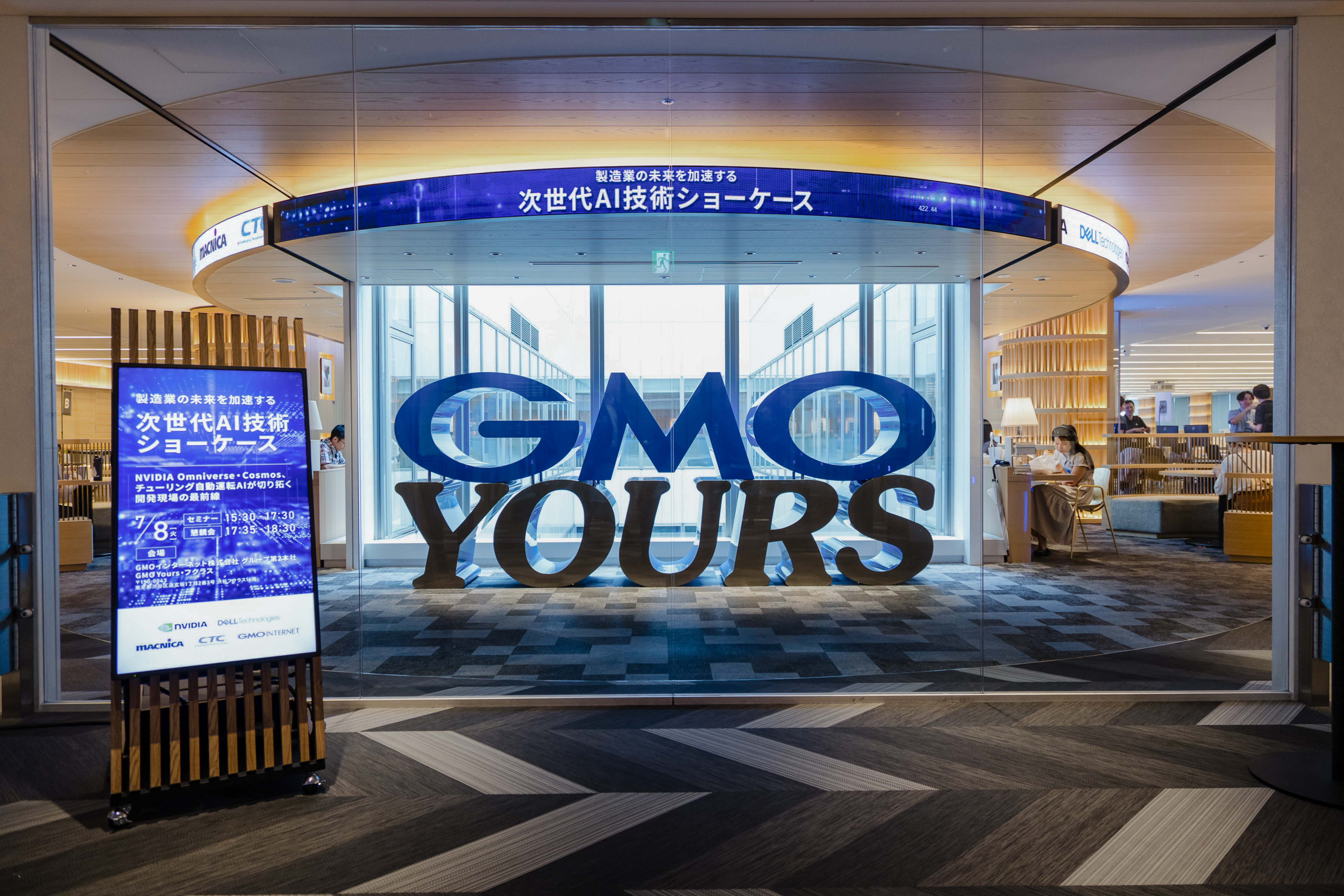
[Event Overview]
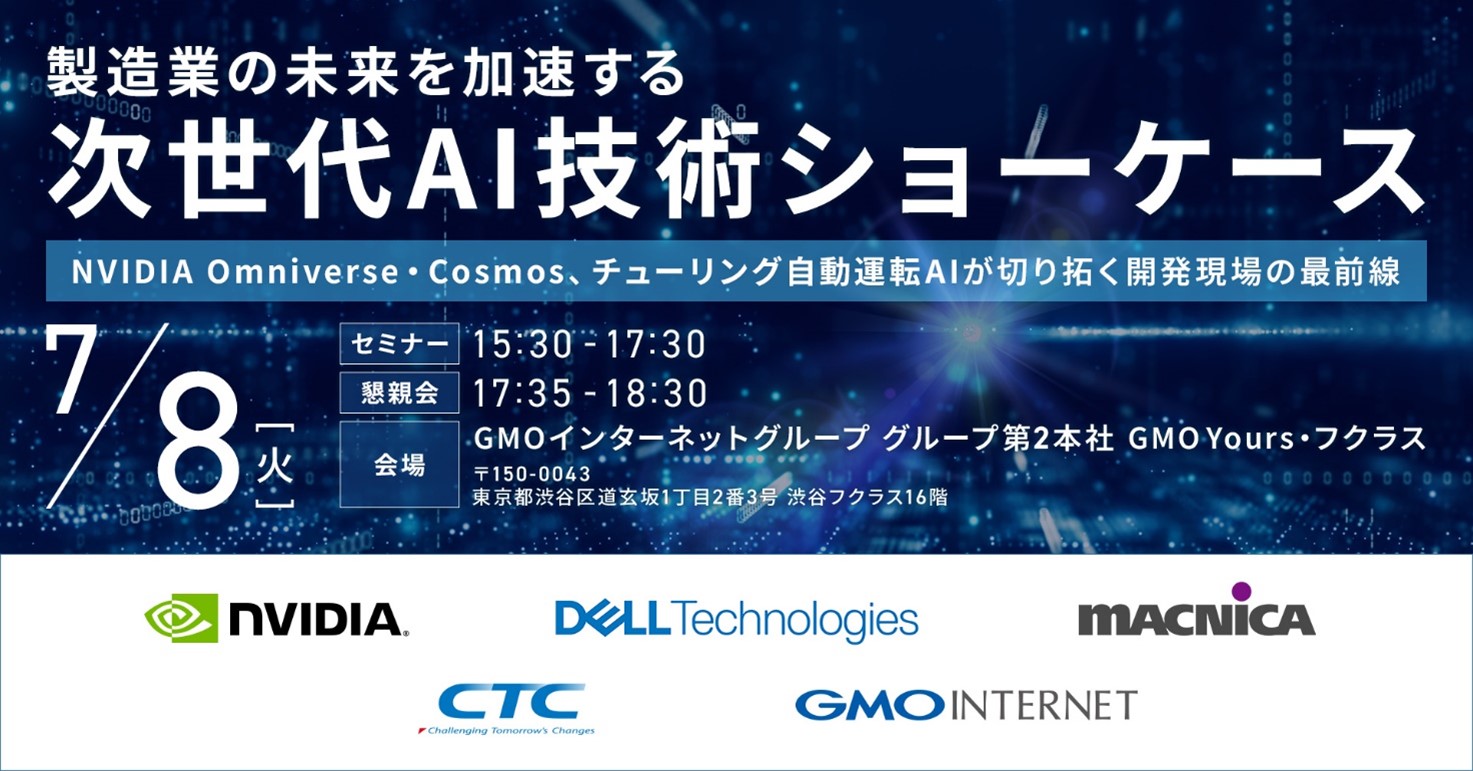
The seminar consisted of four sessions. It began with a presentation by Dell Technologies on the technology areas currently in focus. This was followed by three sessions featuring specific case studies:
・A report on the creation of synthetic data for generative AI using “GMO GPU Cloud” (Macnica / NVIDIA)
・Advanced autonomous driving AI that provides direct driving instructions in an end-to-end (E2E) manner (Turing)
・An implementation case of fine-tuning SLMs (small language models) for on-device use (ITOCHU Techno-Solutions / Headwaters)
All sessions showcased cutting-edge AI development examples utilizing the “GMO GPU Cloud” environment.
[Session 1]
What Are the Nine Technology Areas Currently in Focus?
Dell Technologies Japan Inc.
Takanobu Masuzuki
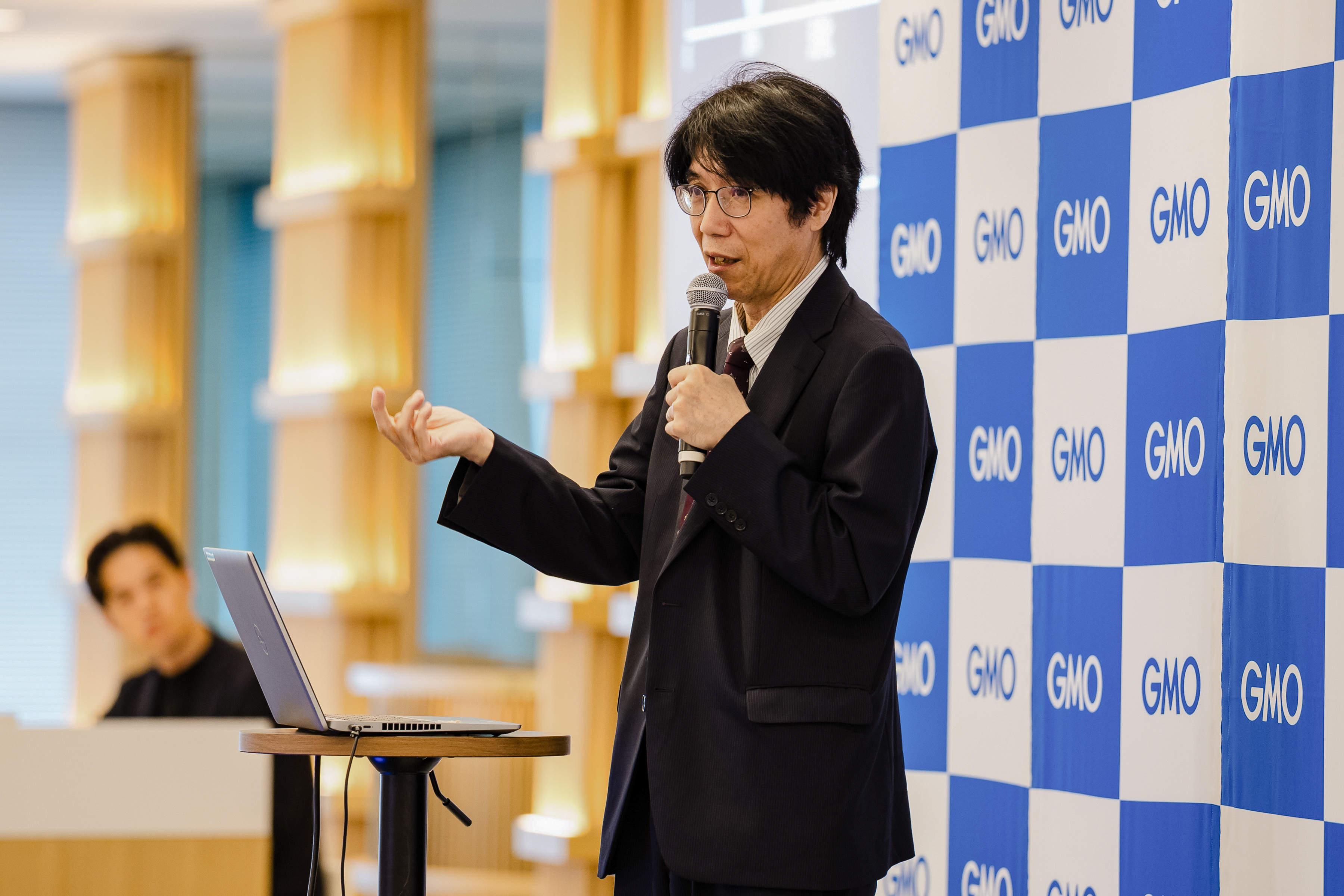 ▲Mr. Masuzuki explaining that “the scaling laws of AI are attracting significant attention”
As AI technologies such as generative AI continue to evolve rapidly, which technology areas should be prioritized from the perspective of providing business solutions? This was the focus of the presentation delivered by Takanobu Masuzuki, AI Specialist at Dell Technologies.
In his session titled “Leading the Wave of Innovation – Cutting-Edge Technologies Driven by Dell Technologies,” he explained the nine technology areas the company is currently focusing on.
Positioning “multi-cloud,” “edge computing,” and “data management” as the foundation of business, he outlined future cloud strategies. In the AI domain, the “scaling laws of AI” were introduced as a key area of focus, along with a proposal for distributed hybrid systems that combine the strengths of discriminative AI and generative AI. At the conclusion of his presentation, Mr. Masuzuki emphasized that “the world of multi-cloud will become increasingly important going forward.”
[Session 2]
Running Physical AI “Cosmos” on “GMO GPU Cloud” to Create High-Precision Videos!
A joint session by Rei Kodera, Macnica, Inc., and Kotaro Yamamoto, NVIDIA GK.
The presentation was divided into two parts: the first half featured NVIDIA introducing “Cosmos” and related AI programs, while the second half presented verification case studies using “Cosmos” by Macnica.
Kotaro Yamamoto from NVIDIA provided an explanation of “NVIDIA AI Enterprise (NVAIE),” a suite of programs uniquely pre-installed in Japan on the “GMO GPU Cloud” environment. NVAIE is a packaged set of software offered by NVIDIA for AI development and deployment.
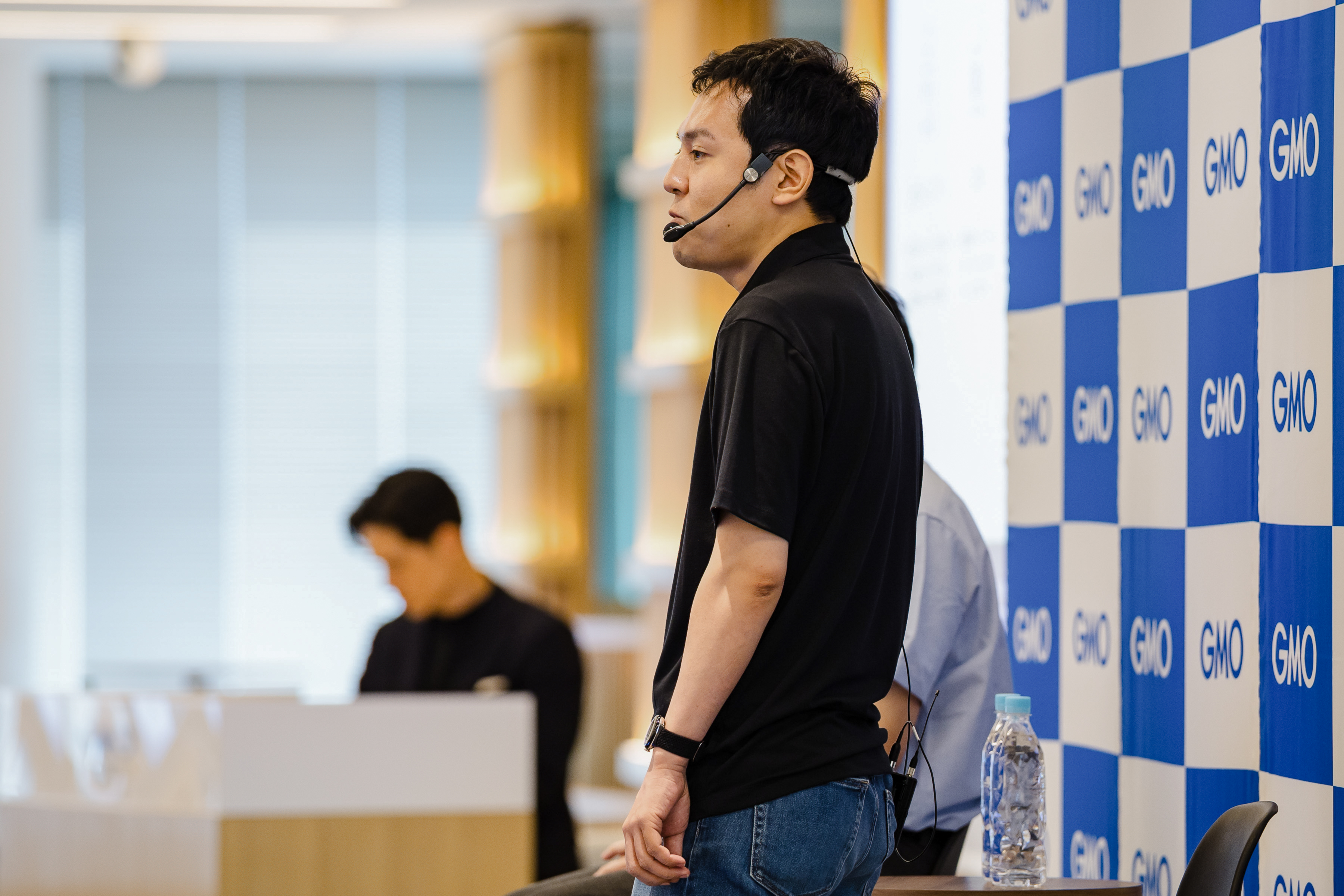 ▲Mr. Yamamoto from NVIDIA explaining the program suite “NVIDIA AI Enterprise,” which can also be used in the “GMO GPU Cloud” environment
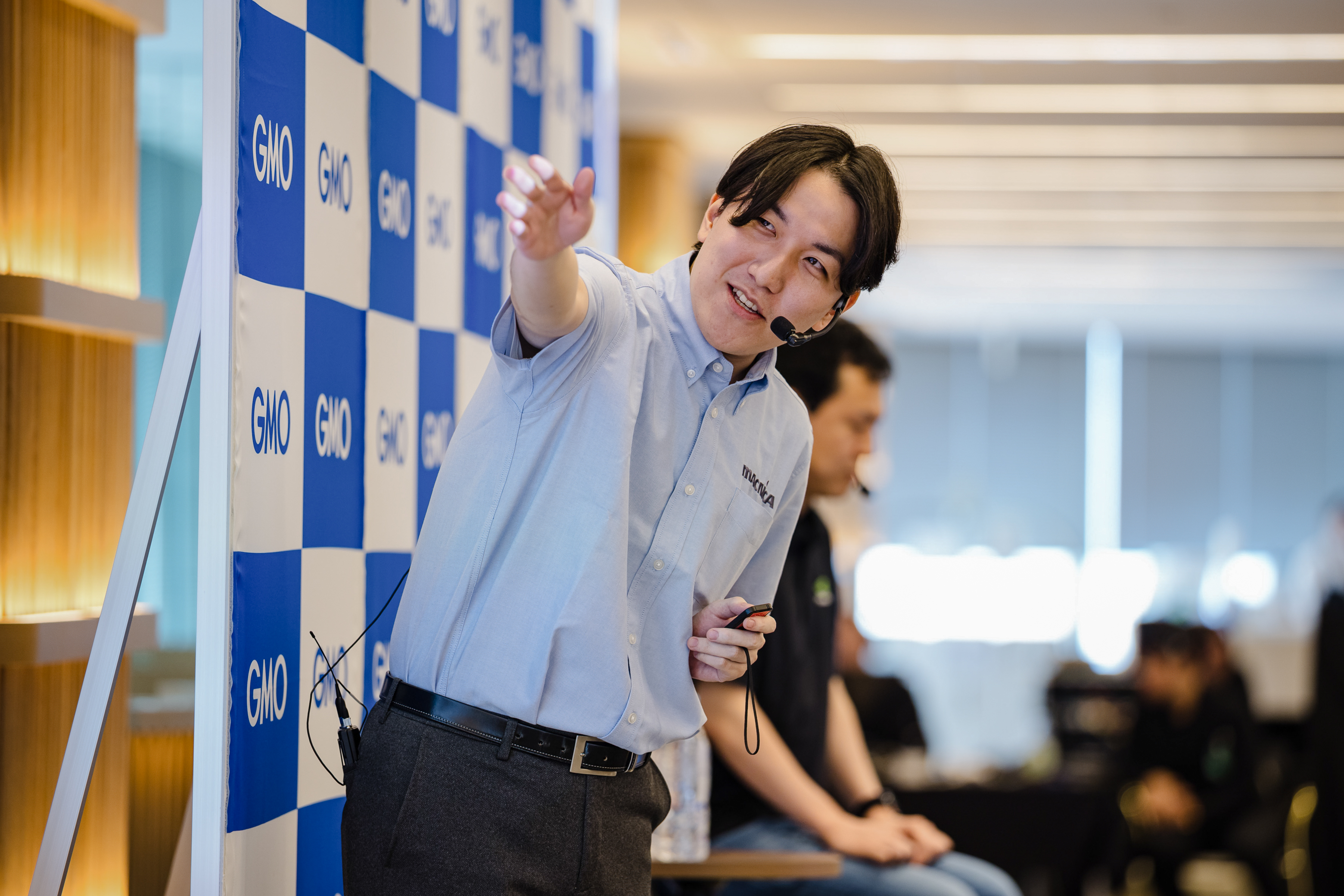 ▲Mr. Ono from Macnica explaining that a demonstration was conducted using the “GMO GPU Cloud” environment equipped with NVIDIA’s high-performance GPU “H200”
Rei Kodera of Macnica and Kotaro Yamamoto of NVIDIA introduced “NVIDIA Cosmos” (hereinafter “Cosmos”), a Physical AI solution, as a generative AI use case utilizing “GMO GPU Cloud.” Physical AI refers to AI that enables autonomous machines to understand the real world and perform complex actions, and NVIDIA provides “Cosmos” as its development platform. One of its key features is training on large volumes of video data.
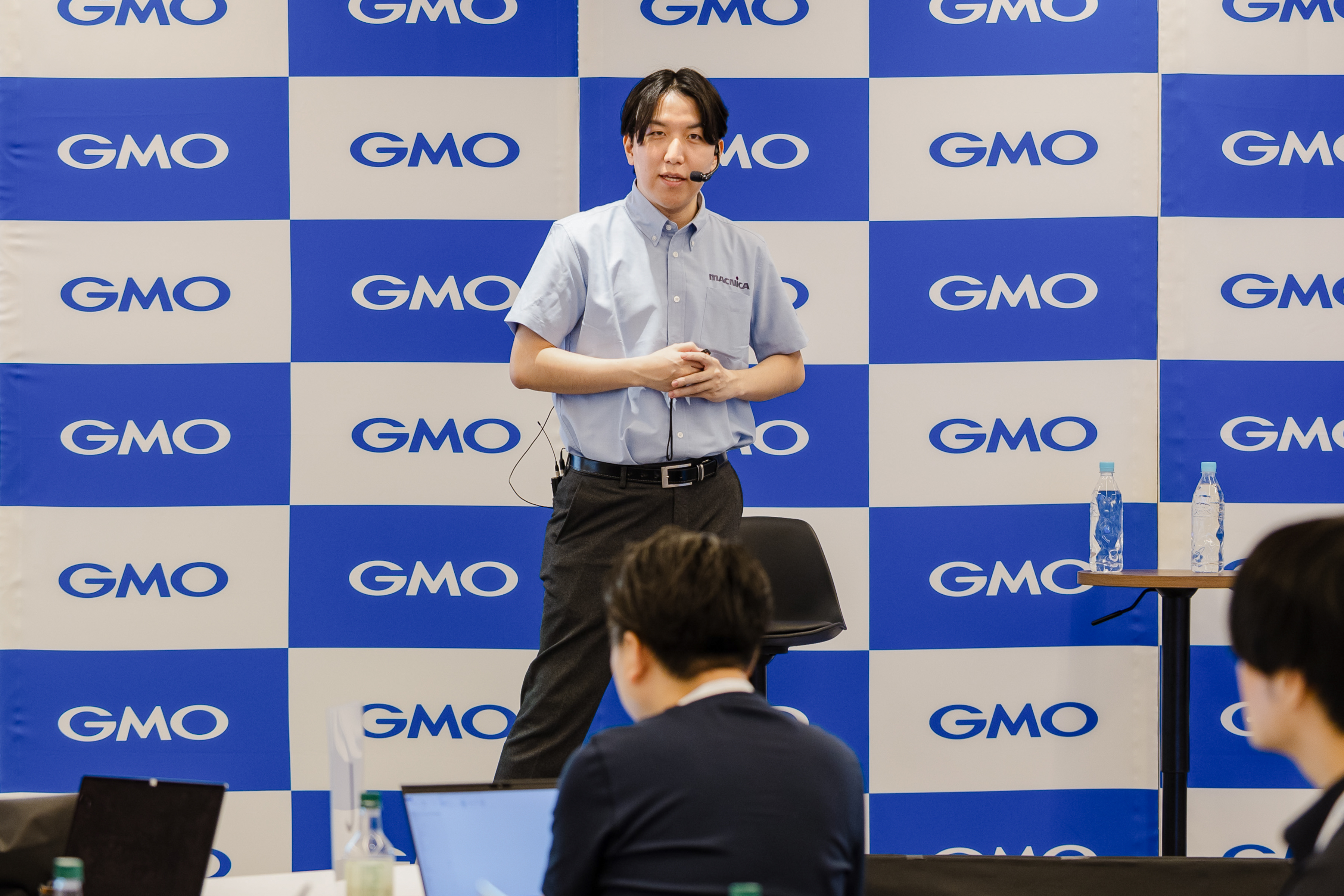
In the second half of the demonstration, a case was presented in which videos captured from the perspective of an automated guided vehicle (AGV) in a warehouse were generated as synthetic data, with actual footage shown during the presentation. Two types of demos were introduced: “warehouse footage” and “simulation videos for autonomous driving.” In both cases, by inputting instruction prompts that set conditions in “Cosmos Transfer,” the process of converting them into realistic visuals was carried out in the “GMO GPU Cloud” environment equipped with NVIDIA’s high-performance GPU “H200.” The resulting quality was so high that it was almost indistinguishable from real footage, with Mr. Kodera confidently describing it as “one of our finest works.”
Mr. Kodera also emphasized that “‘Cosmos’ has already been verified to run on ‘GMO GPU Cloud,’ so we encourage you to try it,” highlighting that the technical groundwork is in place for full-scale adoption by enterprises.
[Session 3]
GPU Cloud Computing Resources Supporting Autonomous Driving AI
Turing Inc.
Kohei Watanabe
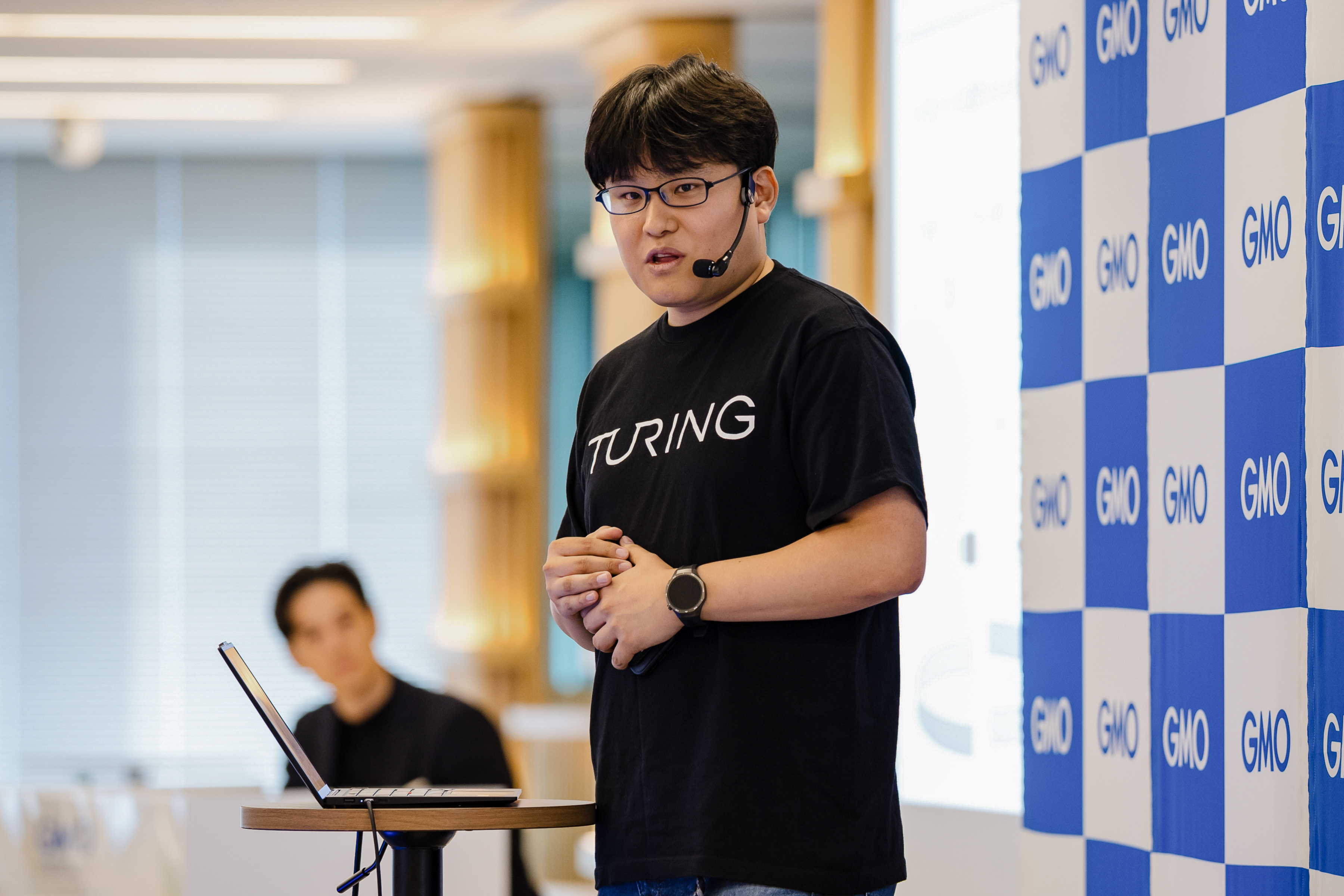 ▲Mr. Watanabe of Turing introducing video footage of autonomous driving tests conducted in the Odaiba area of Tokyo▲Mr. Watanabe of Turing introducing video footage of autonomous driving tests conducted in the Odaiba area of Tokyo
Next, Kohei Watanabe of Turing Inc. presented on “The Technological Foundation Supporting Autonomous Driving AI and Future Outlook.”
Representing Turing, which is advancing technological development for autonomous driving AI with the goal of achieving Level 5 autonomous driving—fully autonomous vehicles—Mr. Watanabe, who is responsible for designing and building the computational infrastructure required for development, took the stage.
He revealed staggering figures, explaining that they are currently conducting large-scale training using tens of petabytes (1 petabyte [PB] = 1,000 terabytes [TB]) of data as a domestically developed dataset for autonomous driving in Japan, utilizing a large number of GPUs, including “GMO GPU Cloud.”
The company has set a goal called “Tokyo30,” a company-wide project aiming to develop an end-to-end (E2E) autonomous driving model capable of operating for 30 minutes without driver intervention (no hands on the steering wheel) in Tokyo during a demonstration experiment scheduled for December 2025. To achieve this, he emphasized that not only training itself but also training speed is critically important.
He further noted that, in a multi-cloud environment, enabling models to rapidly learn from massive volumes of video and image data requires more than just high GPU processing speeds—it also demands high-speed storage and high-speed networking. He emphasized that “GMO GPU Cloud,” which provides all of these capabilities, is making a significant contribution to their development efforts.
[Session 4]
Introducing Implementation Cases of SLM Fine-Tuning for Individual Enterprises
A joint session by Kazuyoshi Miyauchi of ITOCHU Techno-Solutions Corporation and Ryuta Tojima of Headwaters Co., Ltd.
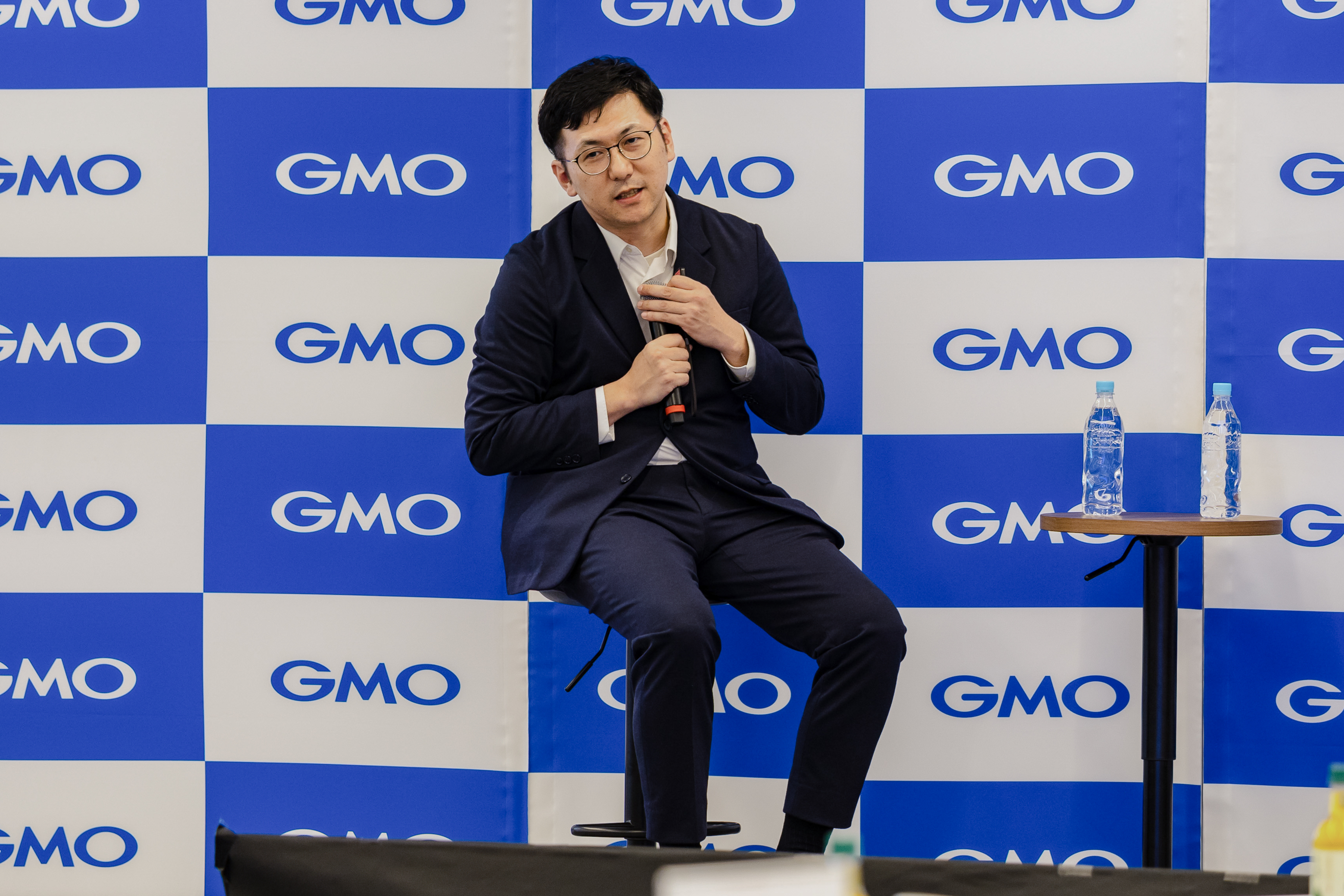 ▲Mr. Miyauchi of ITOCHU Techno-Solutions presenting implementation case studies of “SLM models”
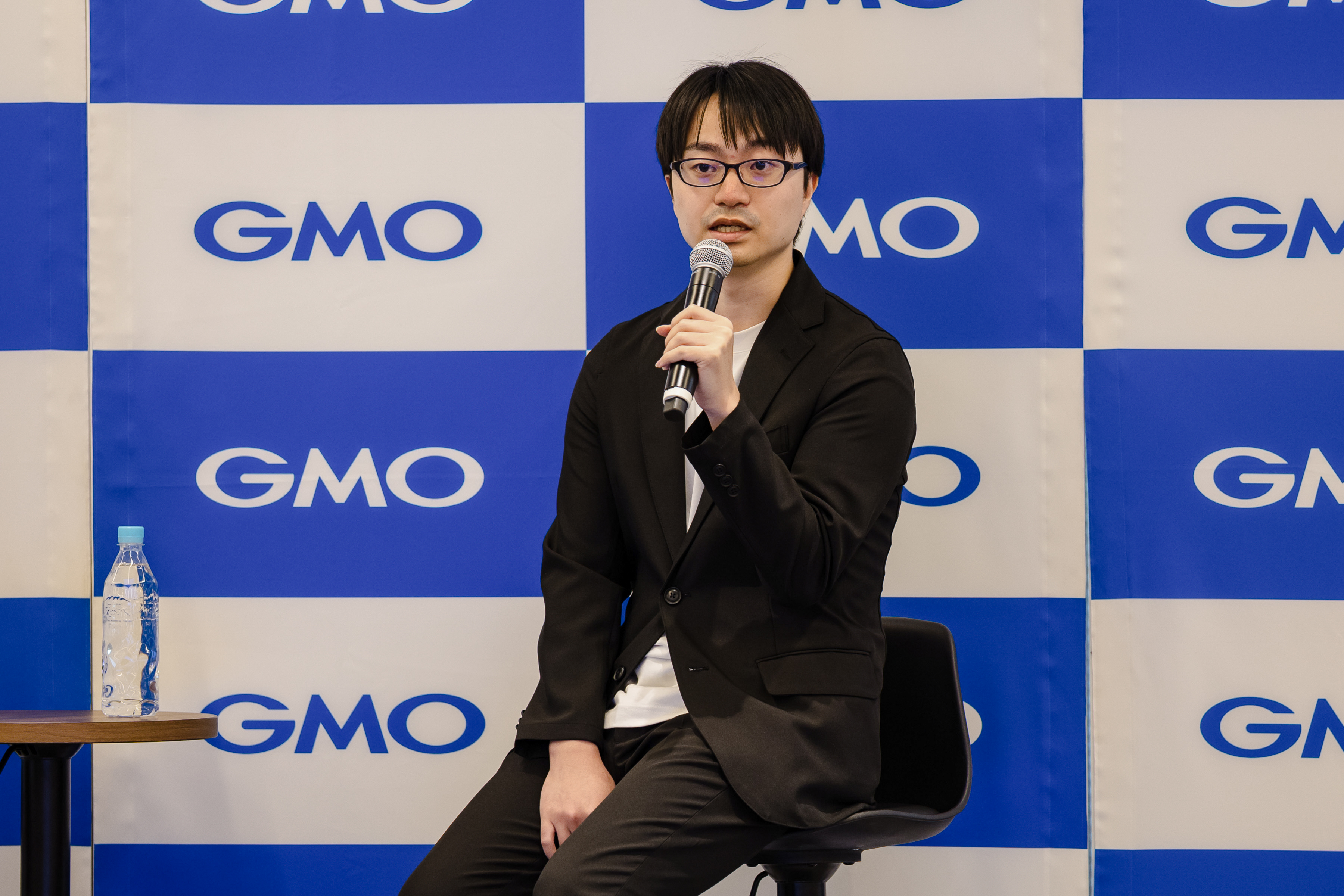 ▲Mr. Tojima of Headwaters explaining key validation points in application development
In the final session, titled “Implementation Cases of On-Device SLM Fine-Tuning,” Kazuyoshi Miyauchi of ITOCHU Techno-Solutions and Ryuta Tojima of Headwaters took the stage. They introduced SLM (Small Language Model) fine-tuning as an example of AI customization for business applications.
The SLM model implementation presented in this session involved the development of an iPad application as part of a “work efficiency improvement project for on-site staff” at a major service company. Since customer interactions often include offline situations, the solution enables staff to immediately generate work reports after customer interactions by utilizing a local SLM to assist with report creation.
The adoption of SLM models tailored to individual company operations is expected to expand further, and an additional use case for the manufacturing industry—different from the previously introduced example—was also presented. Mr. Tojima highlighted two key validation points in application development: (1) selecting and optimizing lightweight models suitable for on-device use, and (2) improving accuracy to meet business-level requirements.
Finally, Mr. Tojima emphasized that strengthening development in areas such as fine-tuning and quantization is essential for implementing SLM models tailored to individual companies, and that the powerful GPU environment provided by “GMO GPU Cloud” plays a crucial role in enabling this.
[Booth Exhibits at the Venue]
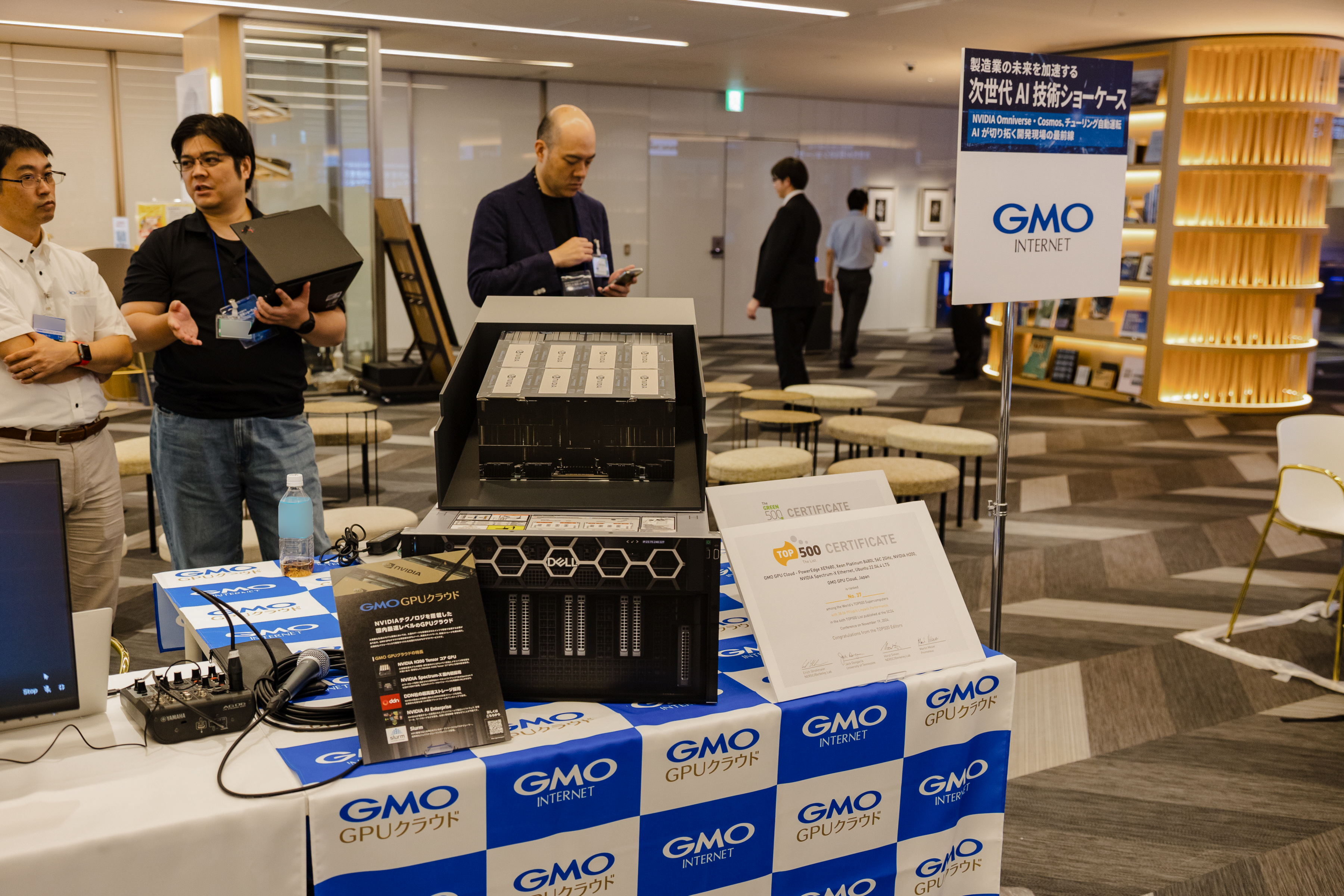
After the presentations, many attendees gathered at the booths set up around the venue, enjoying a relaxed time for conversation.
At the booths, the latest systems and solutions from each company—ranging from autonomous driving and robotics to generative AI—were showcased all in one place, providing a valuable opportunity to experience cutting-edge technologies up close that are not usually accessible. Through hands-on demonstrations, visitors were able to operate and experience these technologies firsthand, gaining insight into how next-generation AI will transform industries and everyday life, which clearly sparked strong interest and high expectations.
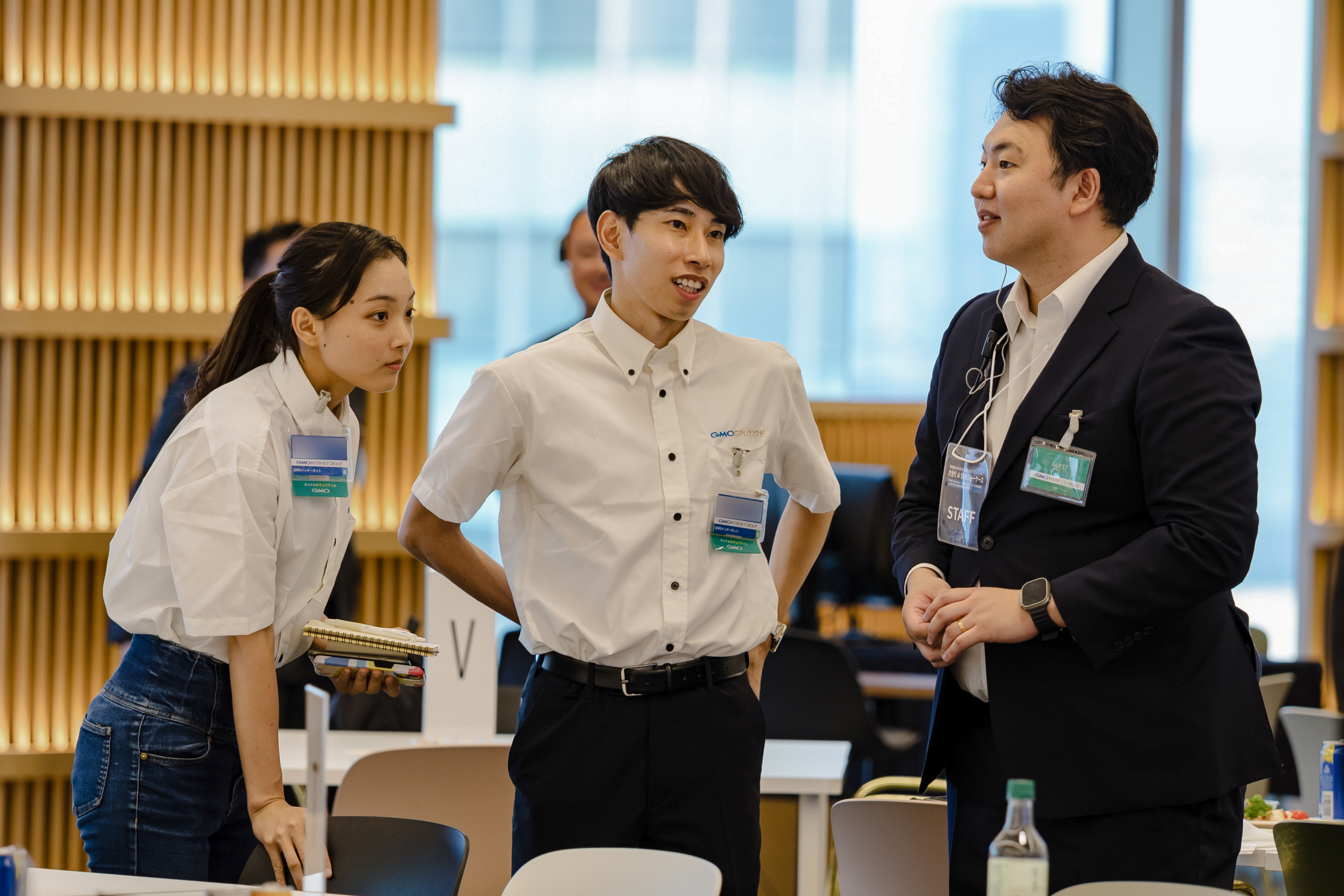
Through this seminar, it became clearly evident that AI technologies—particularly the fusion of generative AI and Physical AI—are rapidly advancing toward solving real-world challenges, including those in the manufacturing industry. The event provided participants with an अत्यंत valuable opportunity to share and gain technical insights.
